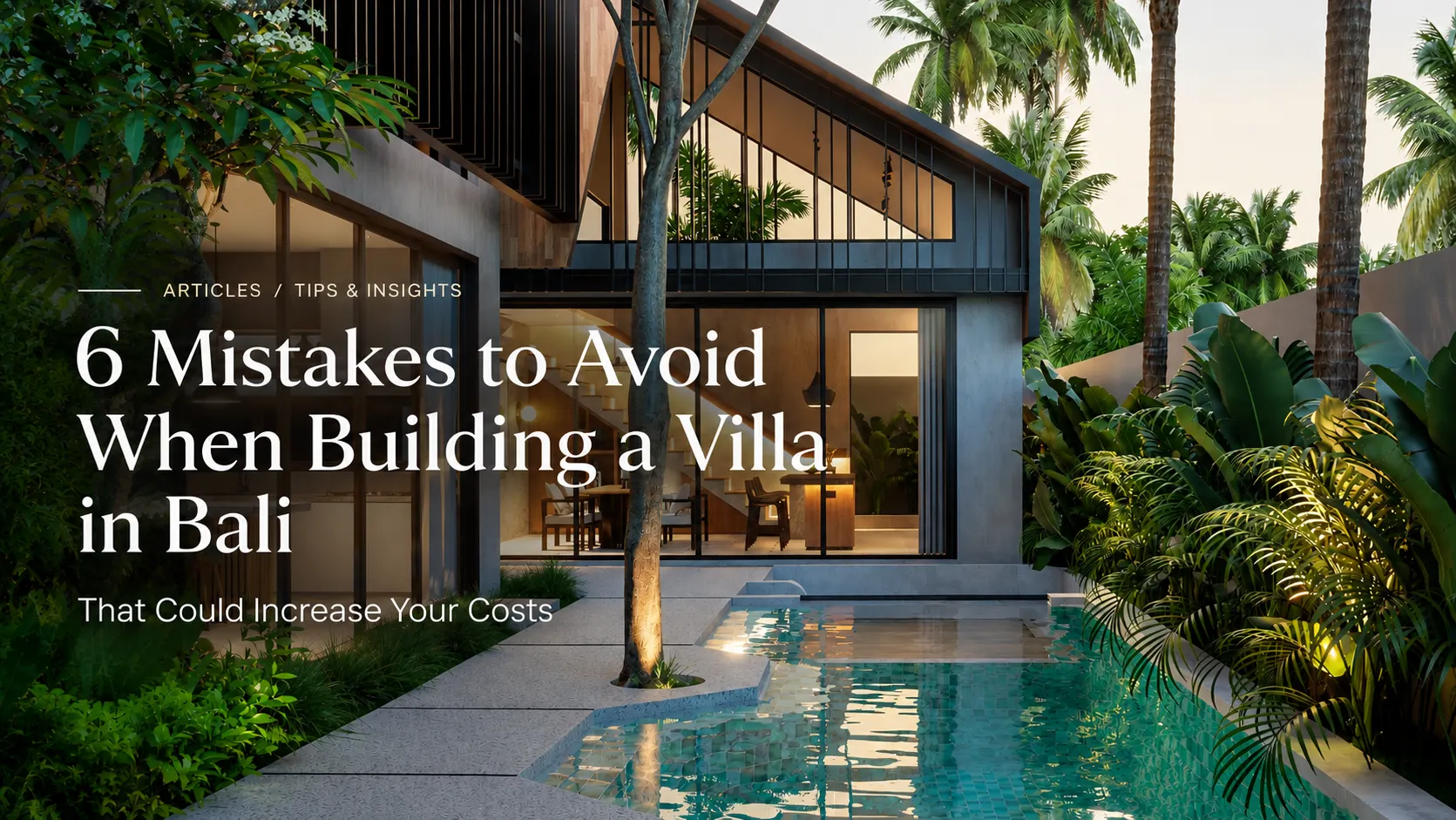
Building a villa in Bali is a dream for many people, whether as a private residence, an investment property, or a holiday rental. With its stunning natural landscapes, rich cultural heritage, and tropical atmosphere, Bali offers endless opportunities to create distinctive architectural spaces with long-term value. However, building a villa involves much more than choosing an attractive design or luxurious materials. Several important decisions must be considered from the beginning, including architectural planning, material selection, budget management, and construction execution. Without proper planning, a construction project may face repeated design changes, unexpected cost increases, construction delays, or a final result that falls short of expectations. So, what are the most common mistakes you should avoid when building a villa in Bali?
One of the most common mistakes is rushing into construction simply because you already have an idea of the design you want.
Before construction begins, however, it is essential to understand your space requirements, site conditions, architectural concept, estimated costs, and construction schedule.
Poor planning can lead to numerous changes during construction. For example, a bedroom may need to be enlarged, a staircase may need to be relocated, or the swimming pool layout may need to be revised because it does not fit the original design.
These changes can affect more than the architectural design. They may also increase material expenses, labor costs, and the overall construction timeline.
The solution: Develop a comprehensive plan with your architect before starting construction. Ensure that the design concept, working drawings, space requirements, and estimated budget are clearly discussed and agreed upon.
Many property owners estimate their construction budget using rough calculations or price-per-square-meter figures found online.
However, villa construction costs can vary significantly depending on the location, site conditions, building size, design complexity, material specifications, structural requirements, and planned facilities.
A villa with a simple design will have different cost requirements from one featuring wide structural spans, a swimming pool, specialized landscaping, or intricate interior details.
In addition to the main construction costs, property owners should also consider architectural and engineering design fees, structural and MEP works, interior finishes, landscaping, applicable permits, and a contingency budget for unexpected expenses.
The solution: Prepare a detailed Bill of Quantities (BOQ) or construction cost estimate based on clear drawings and specifications. This helps property owners understand the cost breakdown, compare material options, and establish priorities before construction begins.
Changing a design is not always a bad decision. Sometimes, adjustments are necessary after actual site conditions become clearer.
However, frequent changes without careful consideration can create significant problems. Moving a wall, changing window dimensions, or modifying a bathroom layout, for example, may affect structural works, electrical installations, and plumbing systems.
If these changes are made after the relevant work has already been completed, certain sections may need to be demolished and rebuilt.
This can increase expenses and extend the construction schedule.
The solution: Finalize as many design decisions as possible before construction begins. Whenever a change is necessary, discuss its potential impact on costs, timelines, quality, and related technical works before proceeding.
Materials play an important role in determining a villa's quality, visual character, and long-term maintenance costs.
Choosing the cheapest materials may reduce initial expenses. However, these materials are not necessarily the most economical option over time if they are unsuitable for the local environment or the building's intended use.
In tropical environments such as Bali, materials should be evaluated based on their resistance to humidity, sunlight, rainfall, and ongoing maintenance requirements.
Materials used for swimming pool areas, bathrooms, terraces, and interior spaces also have different performance requirements. For example, flooring in wet areas should provide appropriate water resistance and slip resistance.
The solution: Select materials based on their function, quality, durability, maintenance requirements, and compatibility with the architectural concept. An architect can help compare suitable alternatives to ensure that your choices remain within budget without compromising essential quality and performance.
A building may look beautiful, but it can still encounter serious problems if its technical aspects are not properly planned.
The building structure must be designed according to the project's requirements and site conditions. Meanwhile, MEP (Mechanical, Electrical, and Plumbing) systems cover essential installations such as electrical wiring, ventilation, air conditioning, clean water supply, and wastewater drainage.
If these systems are not coordinated with the architectural design from the beginning, problems may arise during construction. Plumbing routes may conflict with structural elements, lighting positions may not align with the interior layout, or there may be insufficient space for technical equipment.
Correcting these issues after the building is completed can be considerably more complicated and expensive than addressing them during the design stage.
The solution: Ensure that architectural, structural, interior, and MEP designs are properly coordinated. An integrated planning process helps minimize potential technical conflicts and makes construction more organized and efficient.
Once the design has been approved and construction begins, supervision becomes equally important.
Construction involves multiple interconnected activities. Material installation, dimensional accuracy, workmanship, and compliance with approved drawings and specifications must be monitored regularly.
Without adequate supervision, there is a risk that completed work may not meet the agreed specifications.
Small issues that go unnoticed can also develop into larger problems requiring costly repairs.
The solution: Establish a clear supervision system, communication process, inspection schedule, and work approval procedure from the beginning. Ensure that every party understands their responsibilities so that the construction process remains well coordinated.
Building a high-quality villa requires a balance between design, functionality, comfort, budget, and technical execution.
Proper planning helps property owners make more informed decisions. It also allows them to understand the available options, evaluate the implications of different choices, and reduce the risk of unnecessary changes once construction is underway.
This is why architectural planning should focus on more than the visual appearance of a building. It should also consider how the building will be used, constructed, and maintained over time.
Every project has different requirements and challenges. The architectural approach should therefore be tailored to the site's characteristics, the purpose of the development, the owner's lifestyle, and the available budget.
Ade Bali Architect offers services covering architectural design, interior design, landscape design, structural and MEP planning, as well as construction services. Our design & build approach helps connect the planning stage with construction execution through a more coordinated process.
With the right planning, you can gain a clearer understanding of your design, technical requirements, and estimated costs before making important construction decisions.
Planning to build a villa or house in Bali?
Discuss your project with Ade Bali Architect to explore architectural concepts, planning strategies, and construction solutions tailored to your needs.
Ade Bali Architect — Designing beautiful, functional spaces through thoughtful planning.