
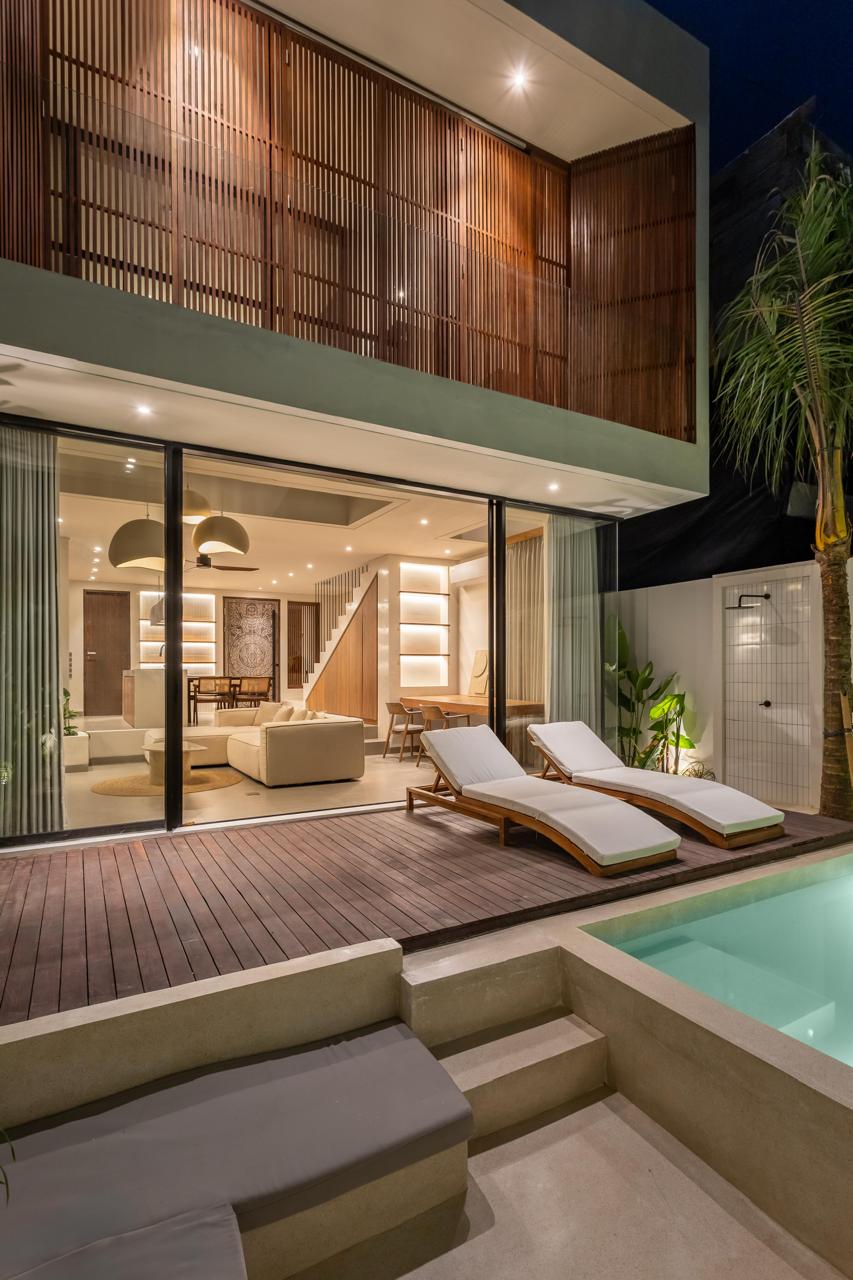
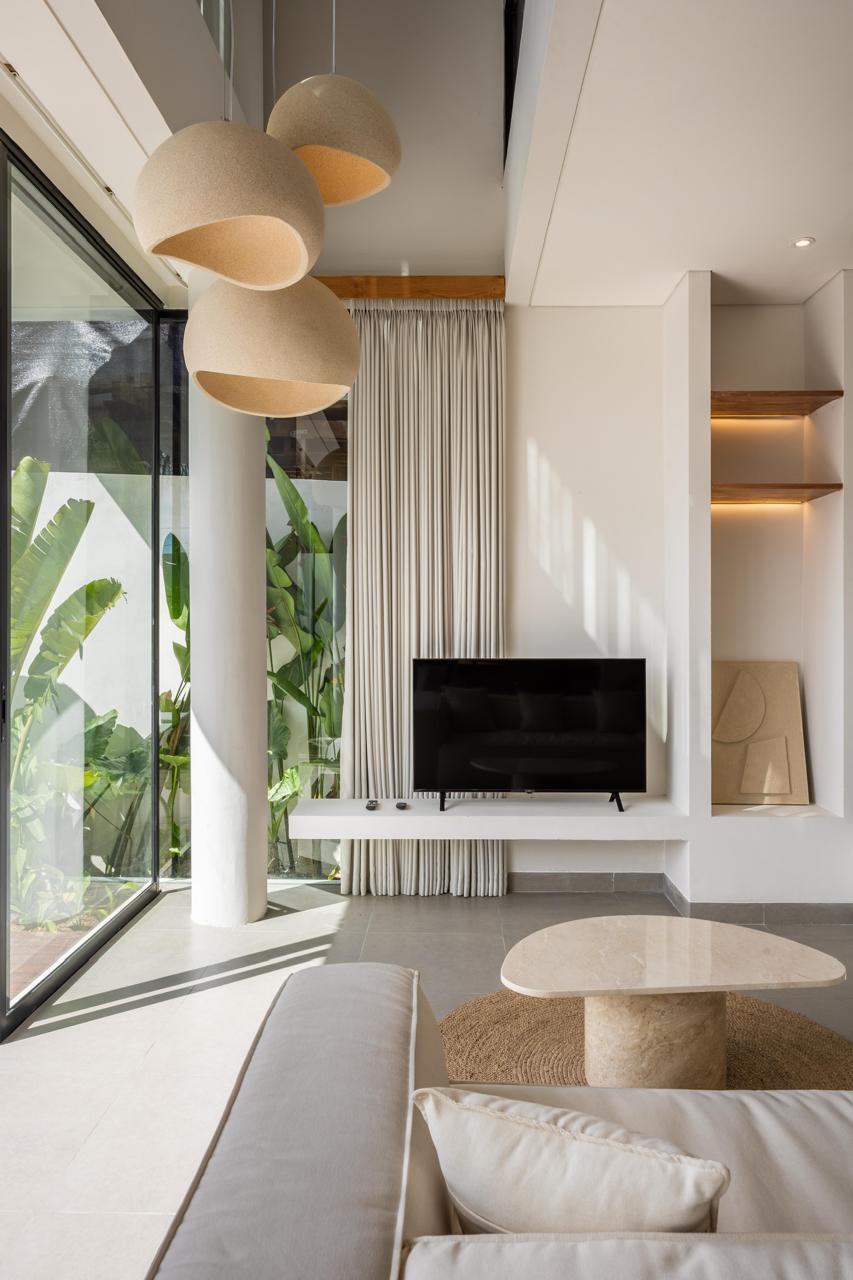
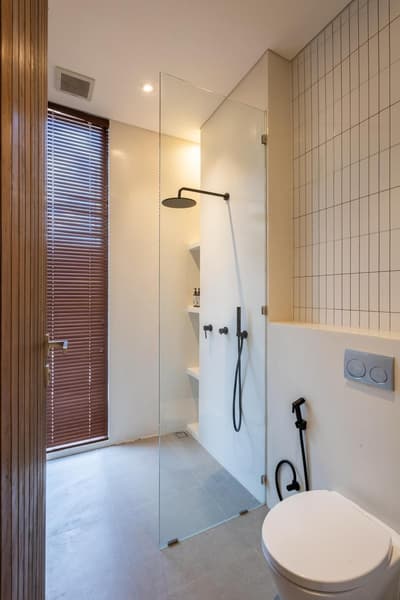
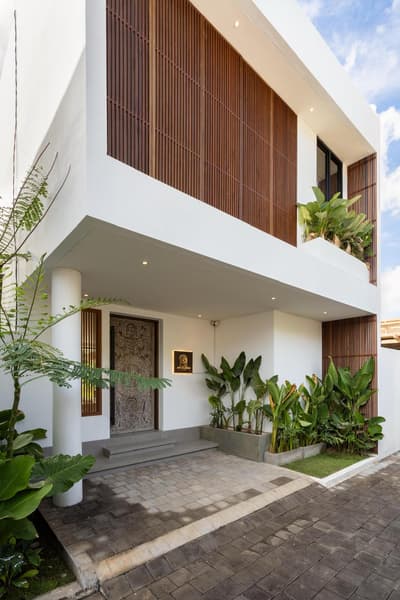
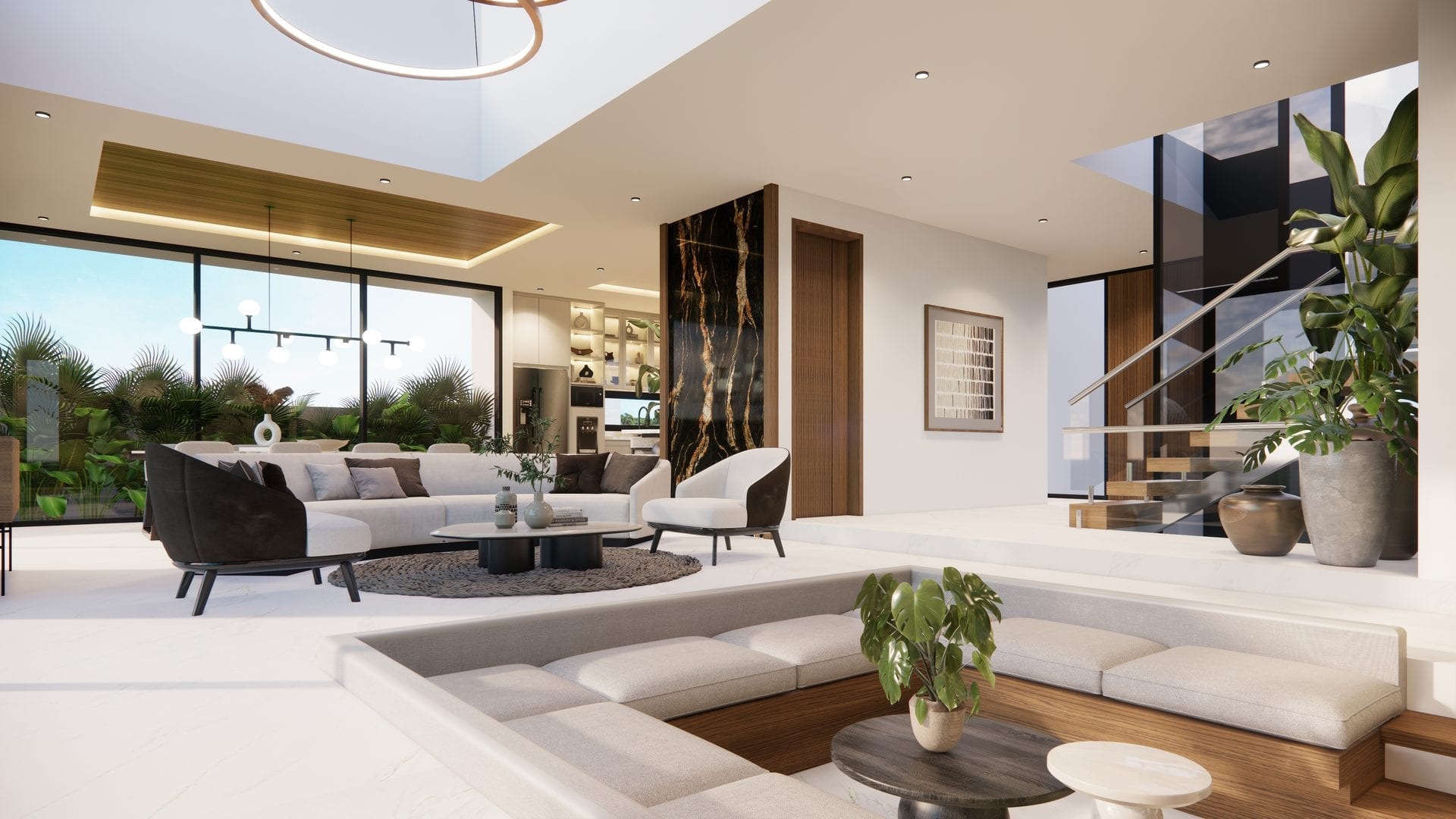
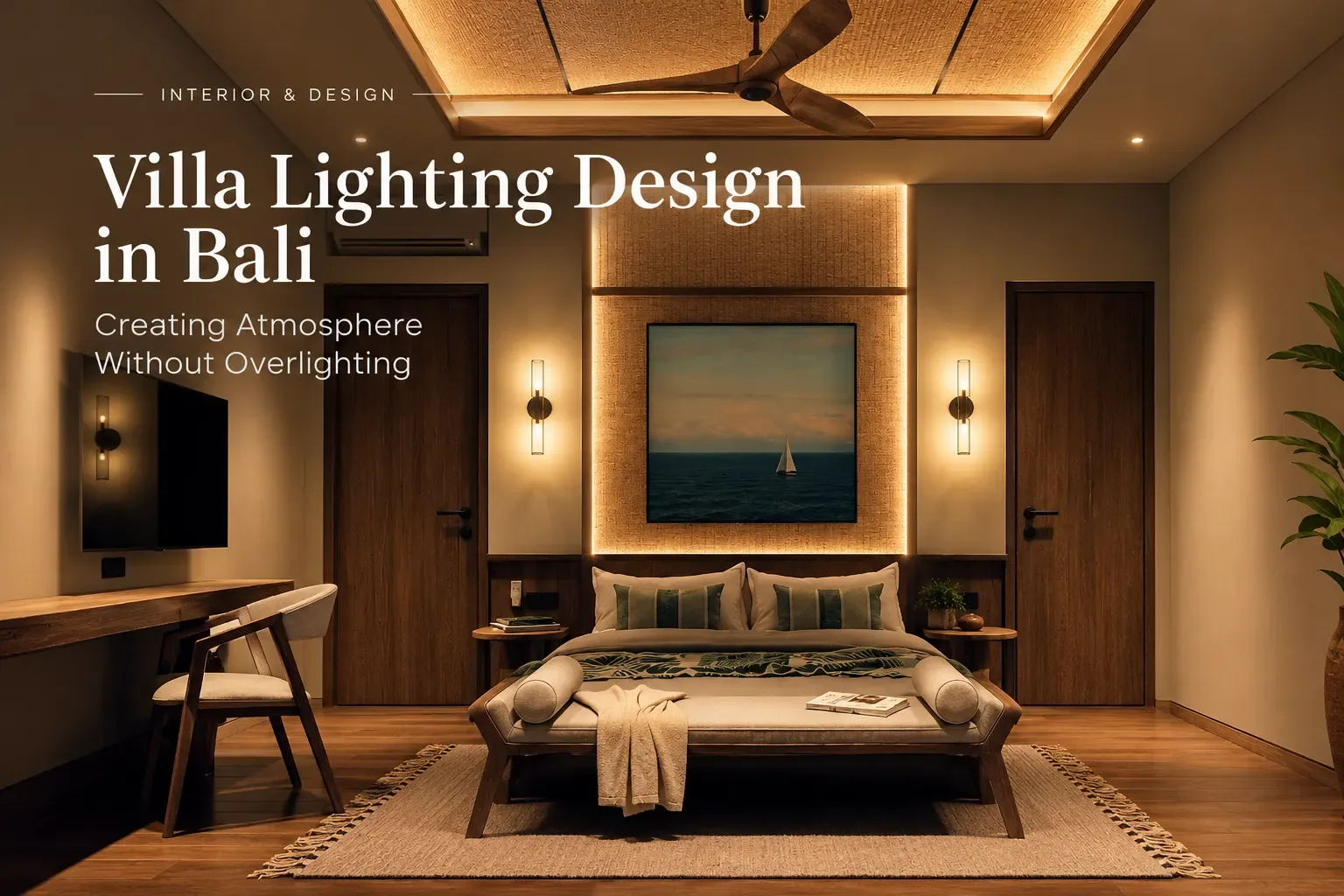
A well-designed villa is not defined by its architecture alone. The way a space feels after sunset can be just as important as how it looks during the day. In Bali, where indoor and outdoor living are closely connected, lighting plays an essential role in shaping the atmosphere of a property. Warm illumination, carefully positioned fixtures, and subtle highlights can transform a tropical villa into a welcoming retreat after dark. However, effective lighting is not about making every corner bright. Excessive illumination can diminish the beauty of natural materials, create visual discomfort, and distract from the surrounding landscape.
The best lighting designs are often the ones that use light selectively. By combining architectural lighting, functional illumination, and landscape lighting, a villa can feel comfortable, elegant, and visually balanced without becoming overly bright.
At Ade Bali Architect, lighting can be considered an integral part of the architectural experience, helping connect the building, its materials, and the surrounding tropical environment.
1. Start With the Architecture, Not the Light Fixtures
One of the most common mistakes in villa lighting design is selecting decorative fixtures before understanding the architecture.
Lighting should respond to the character of the building, the materials used, and the way each space is experienced. A contemporary tropical villa with clean lines may benefit from discreet recessed lighting and concealed illumination, while a villa featuring natural stone, timber, and textured walls may be enhanced by carefully directed accent lighting.
The first step is to identify the architectural features worth highlighting.
These may include a distinctive roof structure, a textured stone wall, a timber ceiling, a sculptural staircase, or a framed view of the garden.
Instead of illuminating everything equally, lighting can guide the eye toward these elements while allowing other areas to remain visually quiet.
This approach creates a sense of depth and hierarchy. The architecture becomes the main focus, while the lighting supports rather than competes with the design.
2. Use Warm Lighting to Create a Relaxing Atmosphere
The colour temperature of light can significantly influence how a space feels.
Warm white lighting is commonly used in residential and hospitality environments because it can create a comfortable, intimate atmosphere, particularly in living rooms, bedrooms, dining areas, and outdoor lounges.
For many villa applications, light sources around 2700K to 3000K can provide a warm appearance that complements timber, natural stone, and other earthy materials.
However, the ideal colour temperature depends on the intended atmosphere, the materials, and the lighting application.
Consistency is also important. Using dramatically different colour temperatures in adjacent spaces can make a carefully designed interior feel visually disconnected.
For example, a dining area illuminated with warm light can feel inviting, while a nearby circulation area can use coordinated lighting to maintain a sense of continuity.
The objective is not simply to make a villa look luxurious. It is to create an environment where guests and residents feel comfortable spending time.
3. Highlight Natural Materials With Architectural Lighting
Natural materials are an important feature of tropical villa design. Timber, natural stone, textured plaster, and woven finishes can introduce warmth and character into a space.
Lighting can reveal these qualities by emphasizing surface texture and creating subtle patterns of light and shadow.
Wall grazing is one technique used to highlight textured surfaces. By positioning a light source close to a wall, the illumination can reveal the relief and depth of the material.
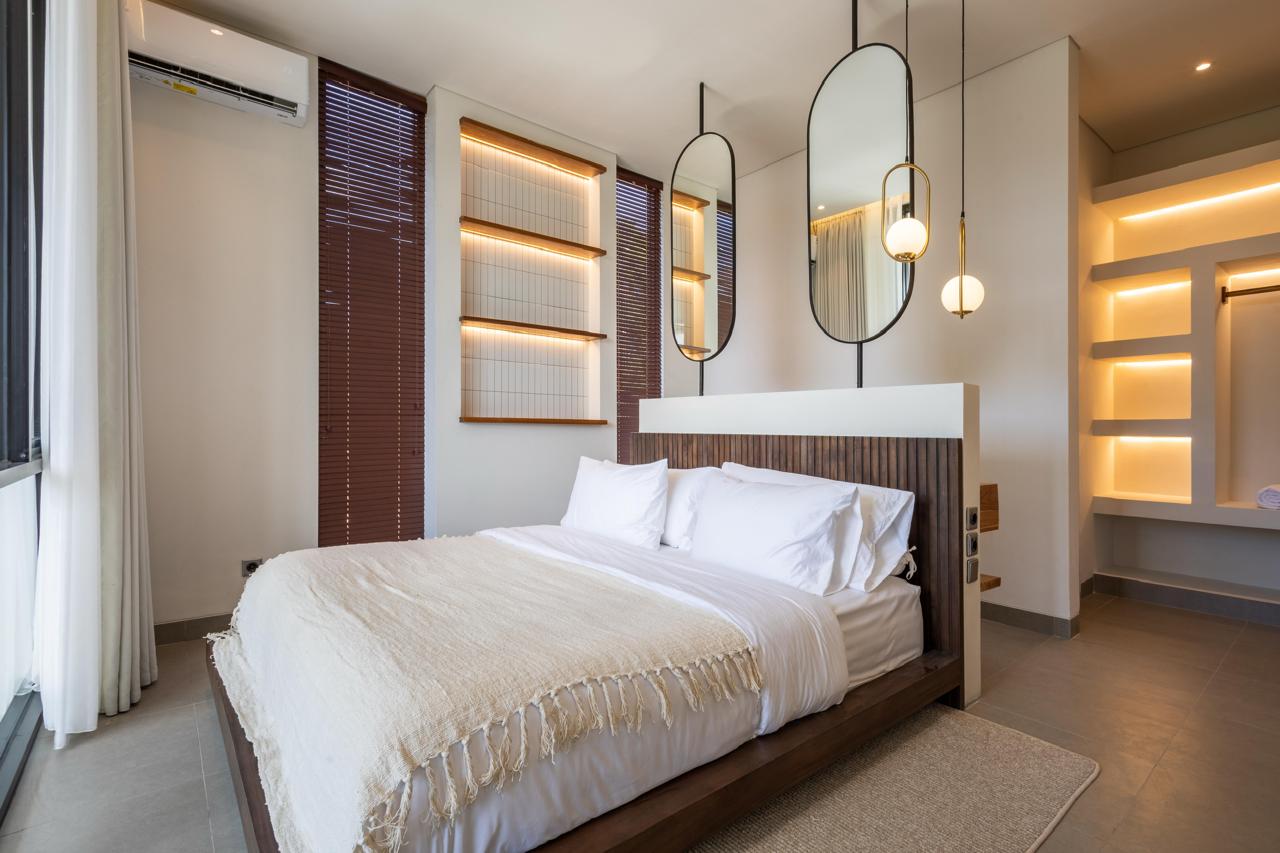
Concealed lighting can also be integrated into ceiling details, cabinetry, niches, and selected architectural elements to create a soft glow without exposing the light source directly.
For example, a textured stone feature wall may become a focal point when illuminated from an appropriate angle. Timber ceiling details can gain greater visual depth through carefully controlled indirect lighting.
The important consideration is restraint. Too many accent lights can make a space feel busy, while poorly positioned fixtures may create glare or emphasize imperfections unintentionally.
A thoughtful lighting plan allows the materials themselves to remain the main attraction.
4. Design Layered Lighting for Different Activities
A successful villa lighting scheme rarely depends on a single type of lighting. Instead, it combines several layers that serve different purposes.
Ambient lighting provides general illumination so occupants can move through a space comfortably.
Task lighting supports specific activities, such as preparing food, reading, working, or using a bathroom mirror.
Accent lighting draws attention to selected architectural features, artwork, planting, or decorative objects.
These layers should work together rather than operate independently.
In a living room, for example, discreet ambient lighting can provide a comfortable base level, a floor or table lamp can support reading, and a subtle accent light can highlight a textured wall.
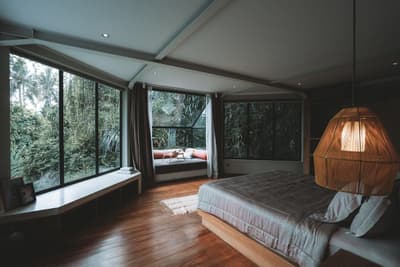
In a bedroom, softer ambient illumination combined with bedside lighting can create a more restful environment. In a kitchen, task lighting is particularly important because work surfaces need sufficient visibility for safe and practical use.
Layered lighting also allows different moods to be created throughout the day.
A brighter setting may be appropriate for cleaning or preparing a space, while a softer evening scene can make the same room feel more relaxed.
When these possibilities are considered during the design stage, the lighting becomes more flexible and better suited to everyday life.
5. Make Outdoor Lighting Feel Natural
Outdoor spaces are central to many villa experiences in Bali. Gardens, terraces, swimming pools, and open-air dining areas often become important gathering places after sunset.
The challenge is to provide enough illumination for safety and usability without losing the atmosphere of the tropical landscape.
Rather than lighting the entire garden uniformly, it is often more effective to focus on selected elements.
A pathway can be illuminated with discreet, appropriately shielded fixtures. A mature tree may be highlighted with carefully controlled uplighting, while a terrace can use warm, indirect illumination to create a comfortable setting for evening relaxation.
Lighting should also preserve the visual relationship between indoor and outdoor spaces. When the garden is thoughtfully illuminated, views from the living room can remain engaging after dark.
At the same time, excessive brightness near windows can produce reflections that make it harder to see the landscape from inside.
Outdoor lighting should therefore be coordinated with interior lighting, window placement, and the intended views.
Fixtures should be selected for their exposure conditions, durability, and suitability for tropical weather. Appropriate protection against moisture, corrosion, and environmental wear is particularly important in Bali.
The result should feel natural and understated, allowing the landscape to retain its character after sunset.
6. Create a Beautiful Poolside Atmosphere Without Excessive Brightness
Swimming pools are often among the most visually prominent features of a villa at night.
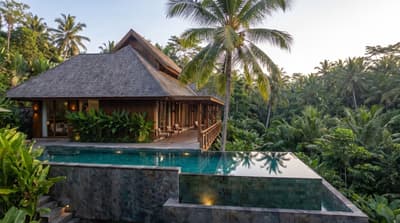
With the right lighting approach, a pool can become a calm focal point that reflects surrounding architecture and vegetation. However, excessive brightness can make the area feel more like a commercial facility than a private tropical retreat.
Underwater lighting can provide gentle illumination within the pool, while carefully positioned landscape lights can highlight nearby planting or architectural features.
Poolside pathways and steps should receive appropriate lighting to support safe movement, particularly where changes in level or wet surfaces are present.
Glare should be minimized, especially from fixtures that are visible from the main living areas or seating zones.
The lighting design should also account for reflections on the water, which can either enhance the atmosphere or become visually distracting depending on the position and intensity of the light sources.
For a more refined result, the pool, surrounding landscape, and adjacent architecture should be treated as a coordinated composition rather than three separate lighting projects.
7. Avoid Light Pollution and Preserve the Night Sky
One of the most overlooked aspects of villa lighting is its impact beyond the property itself.
In Bali, where many villas are surrounded by gardens, rice fields, hills, and natural vegetation, unnecessary outdoor lighting can disturb the visual character of the landscape.
Bright, unshielded fixtures may send light upward or beyond the intended area. This can contribute to glare, wasted energy, and unwanted illumination of surrounding properties or natural habitats.
A more considered approach directs light where it is needed.
Shielded fixtures, controlled beam angles, lower light levels where appropriate, and timers or occupancy sensors can help reduce unnecessary illumination.
Landscape lighting should also consider wildlife and sensitive planting areas. In some locations, limiting nighttime illumination may help preserve a more natural environment.
The objective is not to eliminate outdoor lighting, but to use it responsibly.
A villa can remain welcoming and safe at night without illuminating every tree, pathway, and building surface.
Sometimes, allowing parts of the garden to remain in shadow creates a stronger sense of depth and tranquillity than filling the entire landscape with light.
8. Integrate Lighting Controls for Greater Flexibility
Lighting requirements change depending on the time of day, the activities taking place, and the number of people using a space.
For this reason, lighting controls should be considered alongside fixture selection and placement.
Dimmers allow occupants to adjust brightness according to the intended atmosphere. Separate lighting circuits make it possible to control ambient, task, accent, and outdoor lighting independently.
For villas used as holiday accommodation, preset lighting scenes can make the guest experience more intuitive.
A welcome scene may illuminate the entrance and main living areas. A dining scene can emphasize the table and surrounding environment, while an evening scene can reduce general brightness and highlight selected architectural features.
Timers and occupancy sensors may also be useful in circulation areas or service spaces where lighting is not needed continuously.
The appropriate control system depends on the scale of the project, operational requirements, budget, and maintenance considerations.
Planning these systems early helps ensure that the electrical layout, fixture positions, and control interfaces work together seamlessly.
9. Balance Aesthetic Quality With Energy Efficiency
Beautiful lighting does not need to result in unnecessary energy consumption.
Modern LED technology offers a wide range of options for residential and hospitality applications, including different colour temperatures, beam angles, brightness levels, and dimming capabilities.
However, efficiency depends on more than choosing LED fixtures.
The number of fixtures, their output, operating hours, control strategy, and the amount of light actually required all influence overall energy use.
A well-designed scheme can often achieve its intended effect with fewer carefully positioned lights rather than a large number of high-output fixtures.
Selecting durable products and ensuring that fixtures can be maintained or replaced without unnecessary disruption can also support long-term operational efficiency.
For villa owners and operators, these decisions can improve the balance between visual quality, guest comfort, maintenance, and running costs.
The goal is to create a lighting environment that performs well over time, not simply one that looks impressive on the first night.
10. Why Lighting Should Be Planned From the Beginning
Lighting is most effective when it is considered during the architectural design process rather than added at the end of construction.
Early coordination allows the design team to integrate concealed light sources, electrical points, ceiling details, joinery, outdoor pathways, and landscape features more carefully.
It also helps identify potential problems before they become expensive to resolve.
For example, a concealed lighting detail may require space within a ceiling or wall. A wall-washing effect may depend on the distance between a fixture and the surface. A garden light may need to be coordinated with planting locations and irrigation systems.
These details can be difficult to achieve neatly if the lighting plan is developed only after the building has been completed.
Collaboration between the architect, interior designer, lighting designer where applicable, and electrical consultant helps create a more cohesive result.
By considering light as part of the overall architectural concept, every fixture can serve a clear purpose and contribute to the intended experience of the space.
Conclusion: Let Light Enhance the Architecture, Not Overpower It
The most memorable villa lighting designs are not necessarily the brightest or the most elaborate. They are the ones that create the right atmosphere while allowing the architecture, materials, and surrounding landscape to remain at the centre of attention.
In Bali, where indoor and outdoor spaces are closely connected, thoughtful lighting can transform a villa after sunset. Warm illumination, layered lighting, subtle landscape highlights, and carefully planned controls can create an environment that feels inviting, comfortable, and refined.
Achieving this balance requires more than selecting attractive light fixtures. It involves understanding how people use each space, how materials respond to light, and how the building relates to its surroundings at night.
At Ade Bali Architect, we believe that every architectural element should contribute to a cohesive design experience. By considering lighting alongside architecture, interior spaces, and landscape planning, we can work toward creating villas that are visually compelling by day and equally inviting after dark.
Planning a villa project in Bali? Thoughtful lighting design can help bring your architectural vision to life, creating spaces that balance beauty, comfort, and functionality.
Contact Ade Bali Architect to discuss your project and explore how an integrated architectural approach can shape the atmosphere of your future villa.